Birdsedge Local History
Some of what we know
There's a lot more...
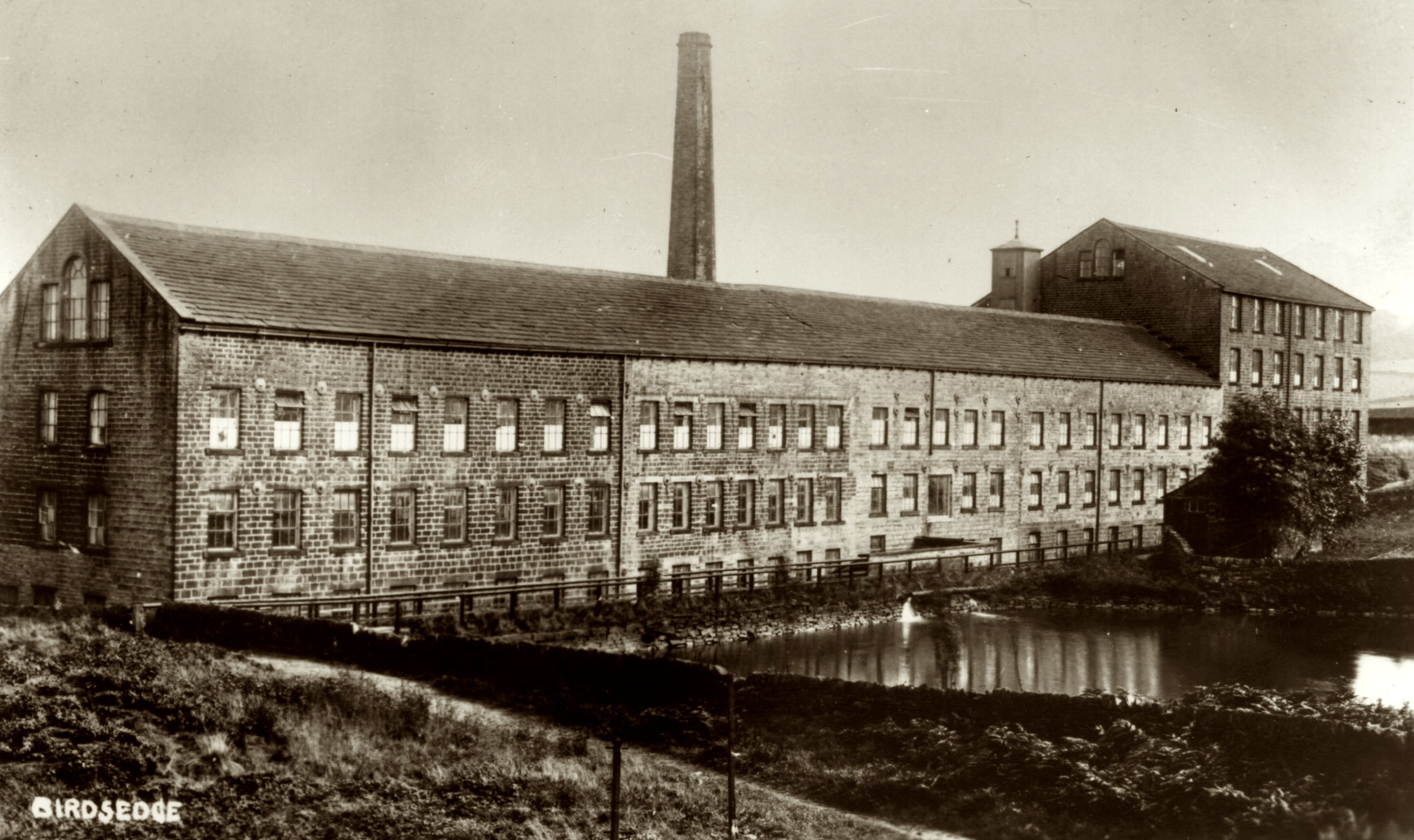
Birdsedge Mill
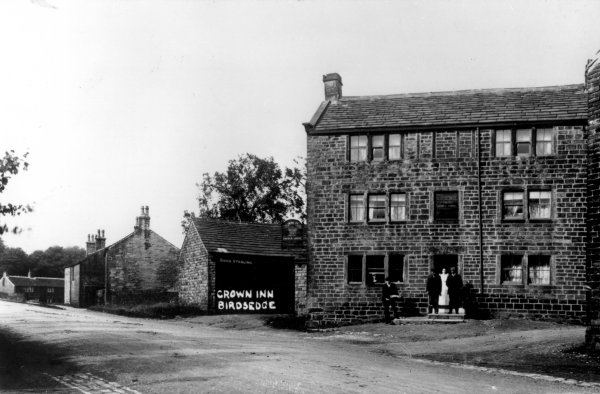
The Crown
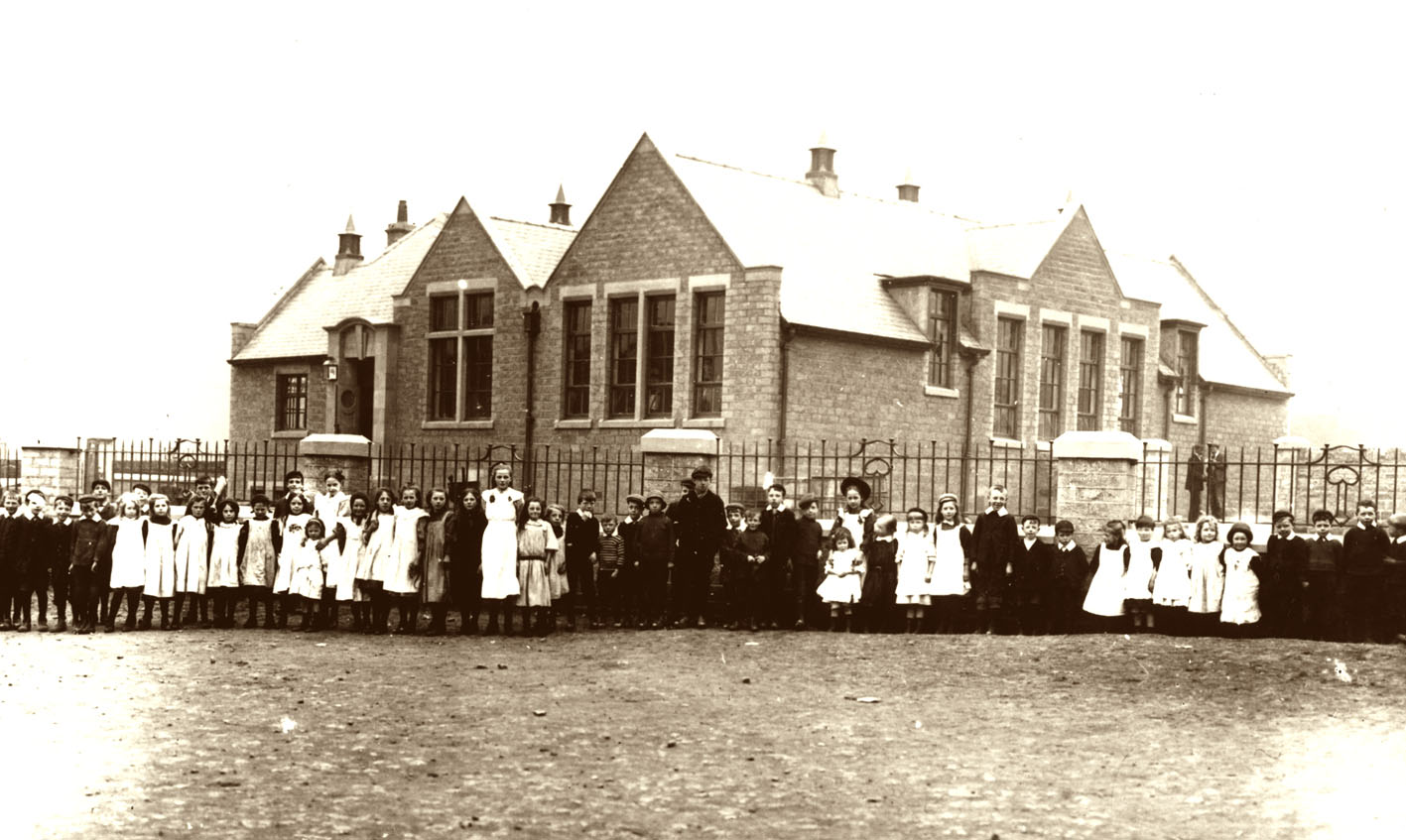
Birdsedge School
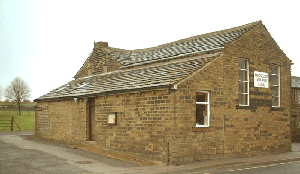
Birdsedge Village Hall
This is before the 2009 rebuild and extensions. The hall was originally built on to the end of Ten Row as a school in the 1870s. It was bought for the village by a local man, a Mr Cook, in memory of two of his three sons who were killed in the First World War. The YMCA took over the running of it at some point, and after it had become derelict (post WW2) the villagers got together to reclaim it for village use in the 1960s.
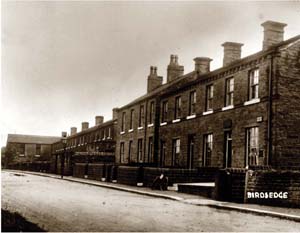
Penistone Road, Birdsedge
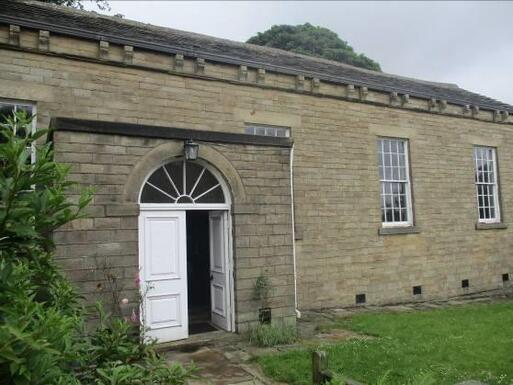
Friends Meeting House, High Flatts
History of Birdsedge & High Flatts
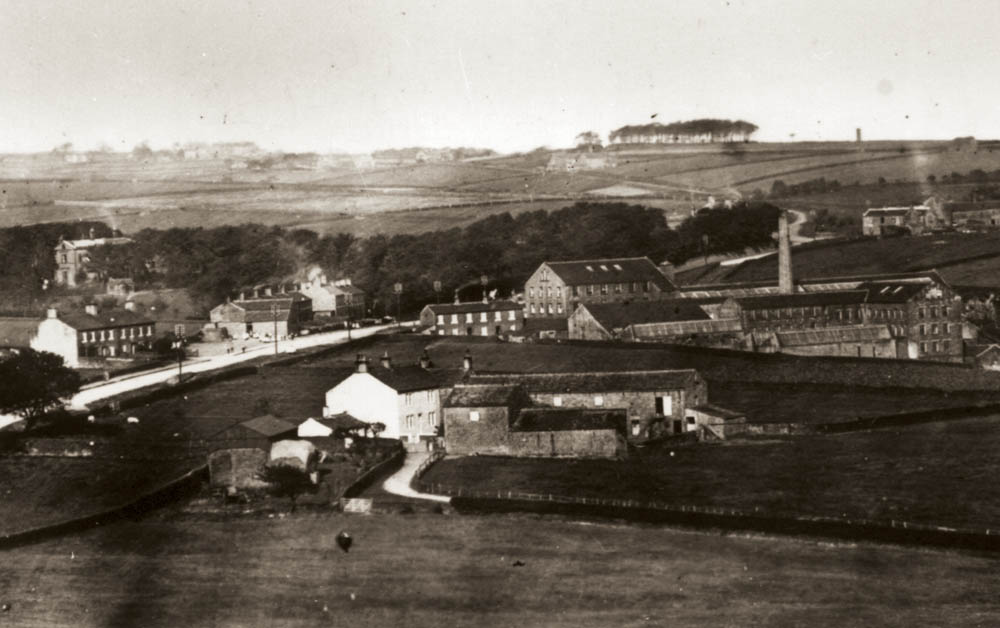
Where does history start? All we can do is state what's known. A neolithic axe head (now in the Tolson museum) was dug up near Castle Hill (top of Birdsedge Lane) in 1875, but records of the Neolithic are a bit thin. Denby appeared in the Domesday Book as Denebi, and in the 1600s the area consisted mostly of a few scattered farms and dwellings.This photograph was part of the Biltcliffe collection (a well known Penistone photographer). Our best guess is that it was taken about 1905. In the centre is Birdsedge Farm, which was certainly there in the 1600s. With a magnifying glass you can just make out girls in little white pinafores on their way to school at what is now the village hall. The current school was opened in 1911, and building work has not yet started. The mill (now owned by Hinchliffes) existed by 1802, but in a much smaller form. The pair of semis now across from the village hall have not yet been built. The mill was first recorded in 1802, but cloth was woven in cottages before the factory system took over. You can still see weavers' gallery windows in buildings like the Crown, and blocked up ones at the back of Sunside Cottages. Much of the area's history is tied up with Quaker history centred on High Flatts.
High Flatts and the Quakers
‘Quaker Bottom’ (locally named) in High Flatts has a fascinating history as a Quaker settlement from the 1600s onwards. The Friends Meeting House is still in use. The settlement is tied to the history of the Dickinson family. Elihu Dickinson ‘the Clothier’ built Low House, while his cousin Elihu Dickinson ‘the Tanner’ built Mill Bank House. The two were said to be rivals and the reason for Elihu the Tanner gave for building Mill Bank was that it overlooked his cousin’s house which was in the hollow. The Dickinsons were industrious and prosperous having interests in coal mines, tanning, weaving and dying. It’s said that Elihu the Clothier used to walk to Huddersfield and back to conduct business.
Pictured is Low House Farm from the Biltcliffe collection, taken some time between 1905 and 1911. For many years it was the home of Frank Cook and his wife, who used to be caretakers for the Meeting House. Frank’s dad, Percy used to live in the house at the right hand end of Pump Row. The High Flatts telephone exchange was there, and their telephone number was High Flatts 3. (Not even three digits. Just 3.) In 1980 the village telephones were still three digit numbers with a High Flatts prefix, until being dragged into the Huddersfield exchange and given six figure numbers, the old three digit ones being prefixed by 606.
Birdsedge Local History Group
In the 1980s we used to have a small but thriving local history group. Sadly three of our members are no longer with us and the history group gradually faded away, however I still have a bunch of research material and photographs, so if anyone would like to renew interest in the group, I’d be happy to share. Please get in touch with me, Jacey Bedford on 01484 606230, or email jacey@birdsedge.co.uk